
2026-11-02 ·
Dryer Vent Lint Buildup and Fire Risk
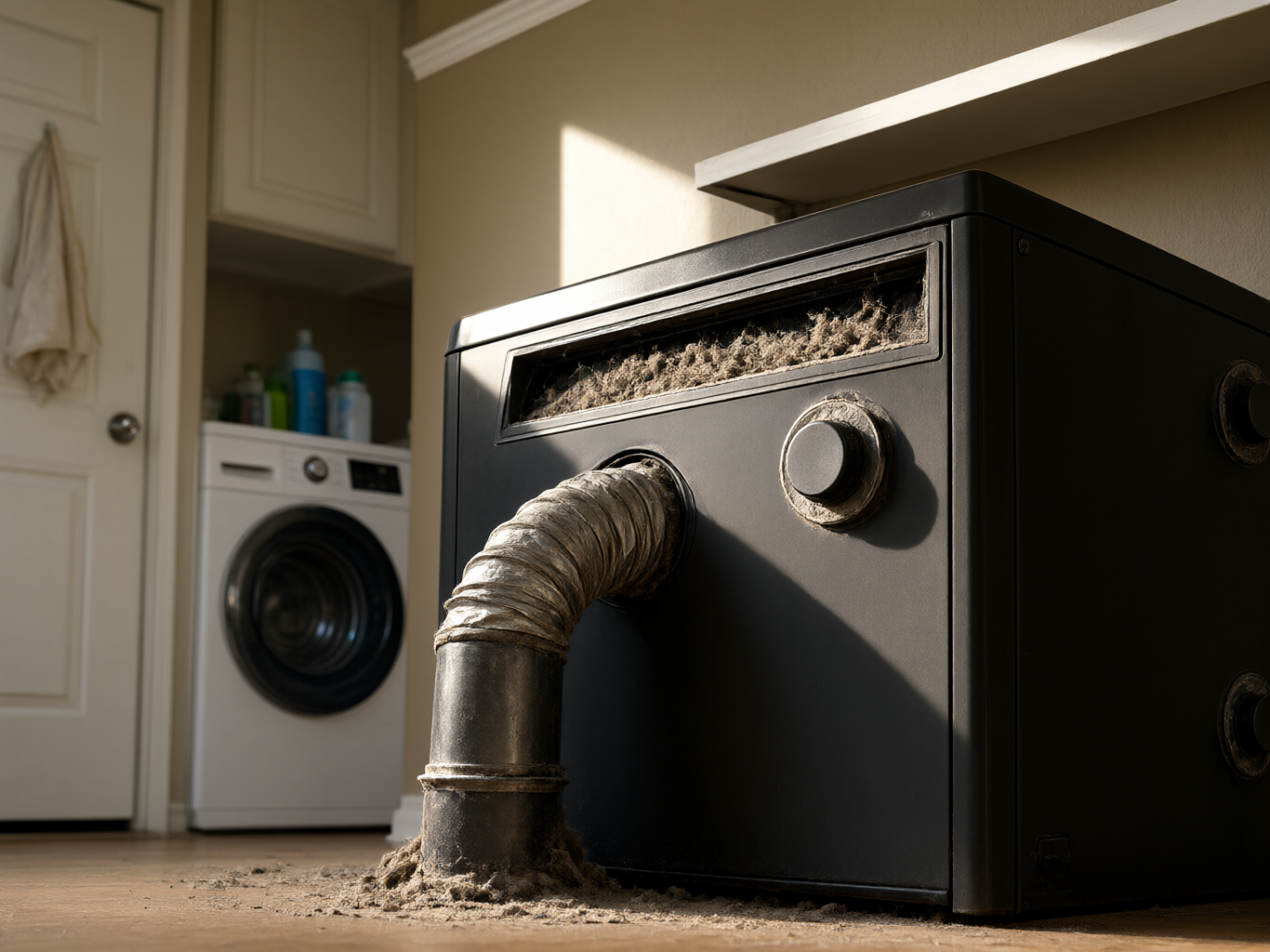
# Dryer Vent Lint Buildup and Fire Risk
Lint buildup inside a dryer exhaust duct can raise operating temperatures by 30–50 percent and is a leading cause of residential clothes dryer fires. In Tyler, Texas, where dryers run through humid subtropical summers and mild winters, a vent can become dangerously clogged in as little as 6–12 months without maintenance. The earliest warning is usually drying time stretching from 30–45 minutes to 60–90 minutes per load. A routine cleaning typically takes about 60-90 minutes; pricing depends on vent length, layout, and condition. If you live in an older home or notice longer cycles, treating the vent as a safety system rather than an afterthought is the most practical step you can take.
Why Lint Builds Up Faster in Tyler Homes
Tyler’s housing stock varies widely by neighborhood, and that variation changes how quickly lint accumulates. In Downtown Tyler and the Azalea District, many homes were built decades ago and still rely on original 4-inch flexible foil or thin metal transition hoses that sag at joints and create lint traps. Newer subdivisions in Hollytree and Charnwood often place dryers farther from exterior walls, requiring 25–35 feet of duct with multiple elbows; every turn reduces airflow and gives lint a place to settle. Soil shifts in Smith County can loosen vent connections over time, opening gaps where lint collects. Add in the region’s humid subtropical climate, with hot summers and mild winters, and dryers run nearly year-round without a seasonal pause, so lint layers up faster than in cooler climates.
Warning Signs That Lint Is Becoming a Fire Hazard
Most dryer vent fires start long before flames appear, so early detection matters. Watch for these indicators:
- Drying cycles that regularly exceed 50–60 minutes for a standard load
- Clothes that feel unusually hot when the cycle ends
- A scorched or musty odor near the dryer or at the exterior vent hood
- Visible lint around the door seal, behind the machine, or at the wall cap
- An exterior vent flap that stays closed or opens only partially while the dryer runs
- Excess humidity in the laundry room, especially during Tyler’s muggy summer months
If you recognize more than one of these signs, airflow is restricted enough to create a fire risk. For a deeper checklist, see our guide on Signs Your Dryer Vent Is Clogged.
How Tyler’s Climate and Housing Stock Affect Vent Safety
The humid subtropical pattern means warm, moist air exits the dryer into an environment that is already damp, especially in summer. When the exterior hood is partially blocked by lint, pollen, or debris blown in from open areas near Caldwell Zoo and the Tyler Municipal Rose Garden, moisture backs into the duct and causes lint to clump into dense, flammable masses. Mild winters mean there is no hard freeze to dry out the system or force homeowners to think about the vent, so neglect can stretch for years. In nearby whitehouse and lindale, similar issues appear in ranch-style homes with short but poorly sloped ducts that collect condensation.
What Professional Dryer Vent Cleaning Involves
A professional visit starts with disconnecting the dryer and inspecting the transition hose for crushing, kinks, or outdated flexible plastic that should be replaced. A technician then uses a rotary brush system and high-efficiency vacuum to remove lint from the full length of rigid duct, not just the section behind the machine. The exterior hood is cleared, the flap is tested for free movement, and airflow is measured before and after to confirm the restriction is gone. For a typical single-story home in Tyler, expect the job to take 60–90 minutes ; pricing depends on vent length, layout, and condition. You can schedule Dryer Vent Cleaning or combine it with a Dryer Vent Inspection & Airflow Check if you are unsure whether the problem is lint or a damaged duct.
Repair or Replacement: Knowing the Difference
Not every clogged vent needs only cleaning. If the transition hose is made of thin white vinyl or crushed foil, it should be replaced with rigid metal or heavy-duty aluminum rather than cleaned and reused. Missing or broken vent caps invite birds and rodents, especially in neighborhoods with mature trees like Hollytree and Charnwood, and a Bird Guard Installation may be the right fix. Long duct runs with too many elbows sometimes require rerouting or a booster fan to restore safe airflow. Repair pricing depends on materials and access, and they address the root cause instead of repeating cleanings every few months. For damaged ductwork, Dryer Vent Repair is the appropriate next step. We are locally owned and owner-operated, provide upfront quotes, and stand behind workmanship you can inspect before we leave.
Simple Maintenance Between Professional Visits
You do not need to wait for a service call to reduce risk. Clean the lint screen before every load, and vacuum the area behind the dryer every three months to catch lint that escapes the drum. Check the exterior wall cap once a month during summer and after storms to make sure the flap opens fully and nothing is blocking it. Keep at least 2–3 inches of clearance behind the dryer so the transition hose does not kink, and avoid overloading the drum, which increases lint production and drying time. If you want a set schedule, an annual maintenance plan can coordinate cleaning and inspection so nothing slips through the year. Learn more at Annual Dryer Vent Maintenance Plan.
Dryer vent lint is not just an efficiency problem; it is a fire safety issue that builds quietly over months. In Tyler, Smith County, and surrounding communities like whitehouse and lindale, regular attention to the exhaust duct keeps drying times reasonable and reduces the chance of a preventable fire. Our business hours are Mon–Fri 8am–6pm and Sat 9am–2pm, and we offer upfront quotes with workmanship you can inspect. If your dryer is taking longer than it should, schedule a cleaning or inspection before the next humid summer pushes your vent past its limit.
How this article differs
This article is about fire risk from lint buildup. It is different from Signs Your Dryer Vent Is Clogged, which lists clog symptoms, and from How Often Should You Clean Your Dryer Vent in Tyler, TX?, which sets a cleaning schedule. Use this article to understand why lint is dangerous, and the other two to act on it.
Frequently Asked Questions
Why is lint flammable even though it feels soft and dry?
Lint is made of tiny, dry fibers with a very large surface area, so it ignites easily and burns quickly once heated. Inside a hot, restricted duct, that combination can turn a small heat buildup into a fire.
Does a clean lint screen mean the vent is safe?
No. The screen catches only part of the lint; fine fibers pass through and collect in the duct, at bends, and at the cap. A screen that looks clean does not prove the full run is clear.
Can lint buildup affect a gas dryer differently from an electric dryer?
Both can overheat, but a gas dryer also needs a clear exhaust path for combustion gases. A blocked vent can push heat and gases back toward the laundry room, so gas dryers should never be run with a restricted vent.
What should I do if I smell burning while the dryer runs?
Stop the dryer, unplug it if it is safe to do so, and do not run it again until the vent is checked. A burning smell means lint or another material may already be overheating inside the duct.