
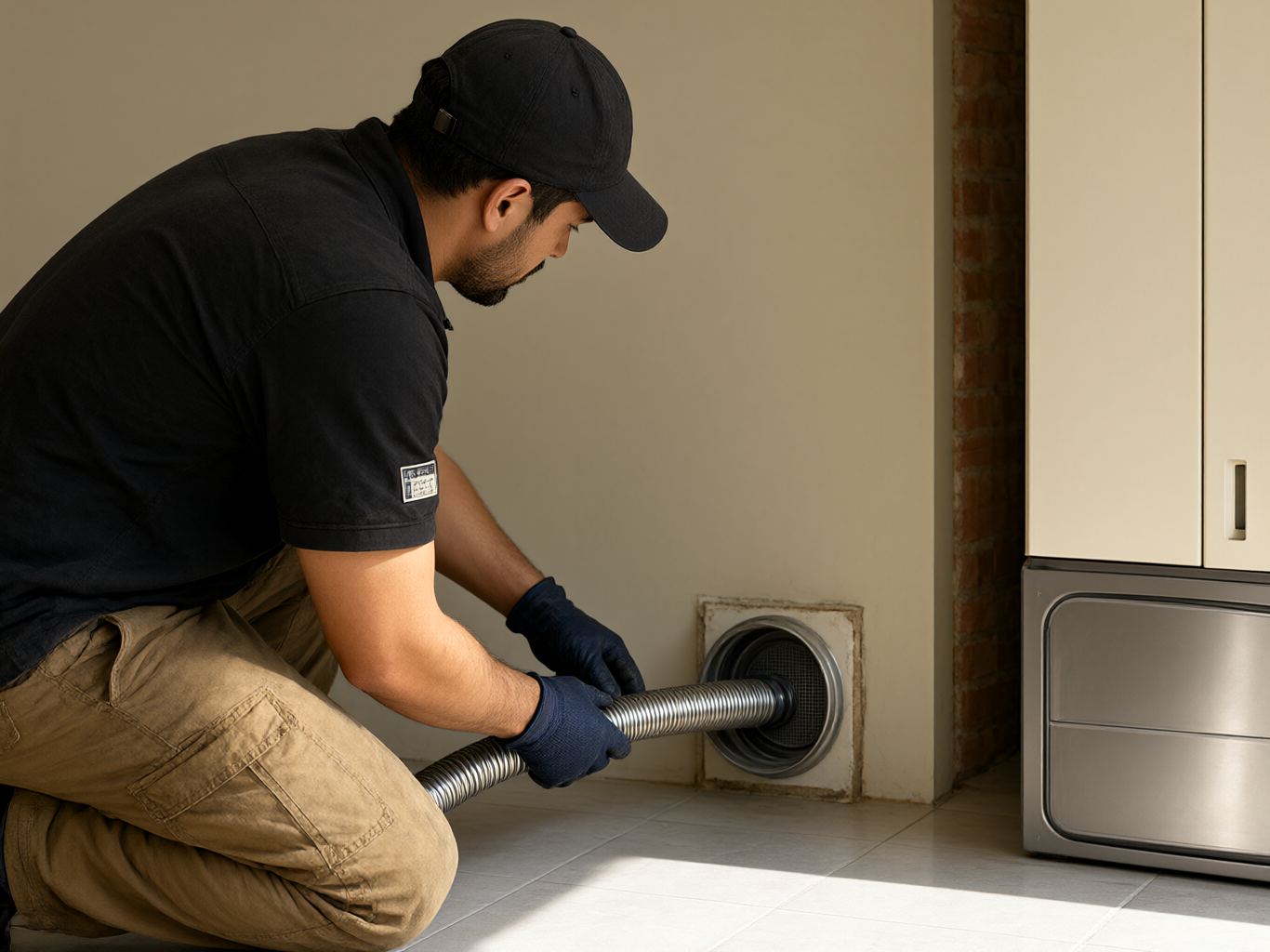
Why Dryer Vent Cleaning Matters in Tyler
Lint is not just fuzzy debris; it is highly combustible and builds up wherever the vent changes direction or narrows. In Tyler’s humid subtropical climate, damp lint can cling to interior walls and restrict airflow even faster than dry lint, forcing the dryer to run longer and heat up more. Homes near Caldwell Zoo or the Tyler Municipal Rose Garden often see heavy seasonal use because outdoor line drying is impractical when humidity climbs. A clogged vent also strains the blower motor and heating element, which shortens appliance life and raises utility bills. Regular cleaning removes the accumulation before it becomes a fire hazard.
Local Housing Stock and Vent Layouts in Smith County
Tyler’s housing stock varies widely, and that changes how a vent is accessed. Older homes in Downtown Tyler and the Azalea District often have laundry rooms tucked into converted porches or basements, with long runs that snake through plaster walls or crawl spaces. Flexible vinyl or foil transition ducts common in these older properties can sag, trap lint, and tear during aggressive brushing. Newer construction in Charnwood and Hollytree usually uses rigid metal, but second-floor laundry rooms and roof-terminated vents add height and complexity. Nearby Whitehouse and Lindale homes frequently have attic runs that collect condensation during mild winters, which can turn lint into a damp mat.
Safety Precautions and Trade Warnings
Before any cleaning begins, the dryer must be unplugged and, on gas models, the supply valve shut off to prevent gas flow while the appliance is pulled away from the wall. A blocked vent on a gas dryer can cause carbon monoxide to backdraft into the laundry room, so we check the exterior damper and confirm it opens freely under airflow. We never use a leaf blower as a substitute for proper agitation, because that can compact lint deeper into the run or damage flexible ducting. Plastic transition ducts should be replaced, not cleaned, and foil tape is not an acceptable repair for metal seams.
How this page differs
This is the core, whole-run cleaning service for a standard dryer vent, from the dryer to its exterior cap. It is different from roof and attic cleaning, which focuses on high or roof-terminated runs, from commercial and apartment cleaning, which cover shared or high-volume systems, and from emergency cleaning, which is for a vent that is blocked or unsafe to use. For a planned, recurring visit, see the annual cleaning plan. This service is available in Tyler, Lindale, and Whitehouse, Texas.
Technician insight
In Tyler, the thing that catches most people out is how quickly humidity turns lint into a damp mat inside the vent, especially in older homes near Downtown where the run is long and has several elbows. Homeowners often assume the lint trap catches everything, but by the time clothes take two cycles to dry, the blockage is already deep in the wall or attic. I always check the exterior damper first—if it’s stuck shut, no amount of indoor brushing will fix the problem.
Long-Run Vent Blockage in a Hollytree Ranch Home
A homeowner in Hollytree reported that loads were taking nearly two hours to dry. We found the exterior wall cap was partially obscured by landscaping and the interior run had a sagging foil section packed with lint. After replacing the transition duct and clearing the full run, airflow returned to normal and drying times dropped to a single cycle.
Dryer Vent Cleaning Services We Offer
✓Residential Dryer Vent Cleaning
Full lint removal from the dryer connection to the exterior wall or roof cap, restoring airflow for single-family homes in Tyler neighborhoods such as Hollytree and Charnwood.
✓Commercial Dryer Vent Cleaning
High-volume vent servicing for laundromats, apartment complexes, and salons near Downtown Tyler, where heavy daily use creates faster lint accumulation.
✓Dryer Vent Repair and Duct Replacement
Replacing crushed flexible transition ducts, damaged rigid pipe, or missing termination caps so the system vents safely instead of leaking lint into crawl spaces or attics.
✓Exterior Vent Cap and Damper Service
Cleaning or replacing stuck exterior dampers and bird guards that block exhaust, a common issue on homes near the Tyler Museum of Art where trees and debris accumulate.
✓Second-Story and Roof-Terminated Vent Cleaning
Accessing high vents through attics or roofs to clear long runs that are especially prone to condensation and lint matting in Smith County’s humid climate.
✓Dryer Transition Duct Upgrade
Swapping outdated vinyl or foil connectors for rigid metal or semi-rigid aluminum, reducing sag points where lint collects in older Azalea District homes.
How it works
- 1
Inspection and Airflow Test
We start at the dryer and the exterior termination, measuring exhaust flow and identifying the duct material, run length, and any visible damage or blockage.
- 2
Disconnection and Access Setup
The dryer is powered down and moved to expose the transition duct; for roof or second-floor vents, we set up safe access to the termination point without damaging landscaping or roofing.
- 3
Mechanical Agitation and Vacuum Extraction
Using rotating brushes and a high-CFM vacuum, we dislodge lint from the full length of the run and capture it at the source so it does not blow back into the laundry room.
- 4
Reassembly and Final Verification
We reconnect the transition duct, restore power and gas, run the dryer, and confirm the exterior damper opens fully and airflow meets acceptable levels.
Pricing
Pricing depends on vent length, the number of elbows, whether the termination is wall- or roof-mounted, and the condition of the transition duct. Accessibility in older Smith County homes with plaster walls or finished basements can add labor time, while replacing damaged flexible duct or a missing cap is priced separately as materials are needed.