
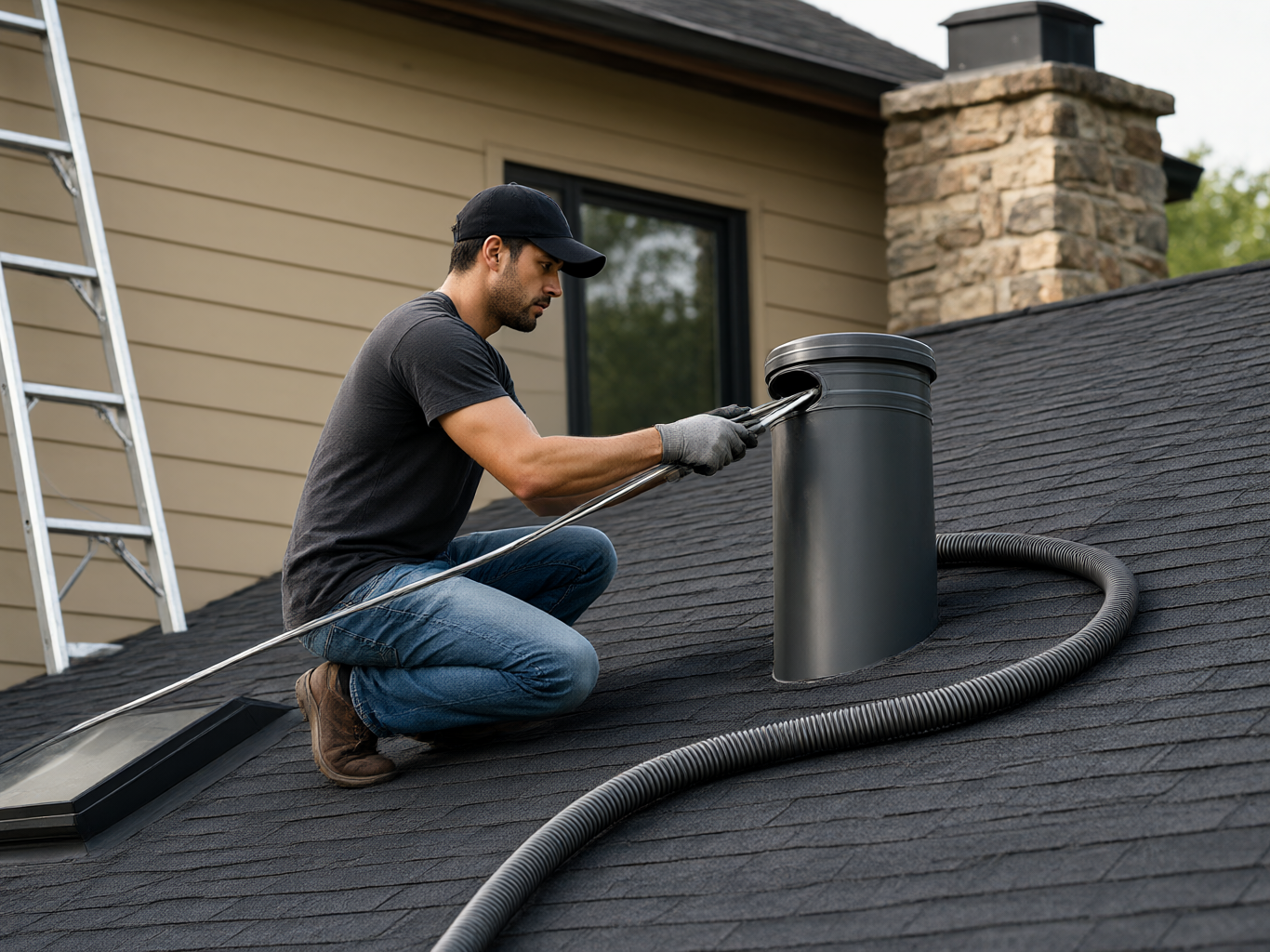
Roof and attic dryer vent systems fail differently than wall exits because the duct runs upward through unconditioned attic space before punching through roof decking. In Tyler's humid subtropical climate, hot summers push attic temperatures well above outdoor levels, while mild winters still allow enough temperature swing to create condensation inside metal duct. That moisture traps lint against the pipe walls, and over time the buildup restricts airflow, forces the dryer to run longer, and raises the risk of overheating. We inspect the full run from the laundry room dryer connection through the attic trunk to the roof termination cap, checking for crushed flexible foil, disconnected joints, and missing bird guards.
Property age across Tyler changes what we find in the attic. Older neighborhoods such as Downtown Tyler and the Azalea District often have shorter, straighter runs from vintage laundry closets, but the original duct may be thin foil that has sagged between joists over decades. Newer subdivisions in Charnwood and Hollytree tend to push the dryer farther from an exterior wall, which means longer attic trunk lines, more elbows, and a roof cap that can be hard to spot from the ground. Smith County's humid subtropical climate means that attic insulation can absorb moisture from a leaking vent joint, so we check surrounding insulation and framing for dampness while we clean, rather than only pulling lint from the pipe.
Safety is the main reason we do not recommend pushing a shop vacuum into a roof vent and calling it done. A gas dryer that cannot exhaust properly may spill combustion byproducts back into the laundry room, and an electric dryer with a blocked roof cap can overheat its heating element and ignite accumulated lint. We work from the roof with fall protection, seal the attic opening while we clean so lint does not drift into living space, and verify termination airflow at the cap before we leave. Homeowners in whitehouse and lindale can book the same roof and attic service during our posted hours, Monday through Friday 8am to 6pm and Saturday 9am to 2pm.
How this page differs
This page is only for vents that run through the attic and exit through the roof. It is different from Dryer Vent Cleaning, which covers a standard wall-exit run, because roof runs need attic access, roof-cap work, and airflow testing at height. For the cap hardware itself, see Bird Guard & Pest Guard Installation. Available in Tyler, Lindale, and Whitehouse, Texas.
Technician insight
In Tyler, the thing that catches most people out with roof and attic dryer vent cleaning is how quickly lint packs down in a long attic run once summer humidity adds moisture to the mix. Homeowners often assume the wall vent is the only exit and never check the roof cap until the dryer takes two hours to dry a load. I always check the attic insulation around the duct for dampness because a leaking joint here can ruin framing before you ever see a stain on the ceiling.
Hollytree Home With Two-Hour Dry Times
A homeowner in Hollytree reported their dryer was taking multiple cycles to dry a normal load and the laundry room felt unusually hot. We found a crushed flexible duct in the attic and a roof termination cap packed with lint and nesting material. We replaced the damaged duct section, cleared the roof cap, and restored full exhaust airflow, and the dryer returned to normal cycle times.
Roof & Attic Dryer Vent Cleaning Services We Offer
✓Roof Termination Cap Cleaning and Bird Guard Inspection
Clearing the roof cap and checking the bird guard restores exhaust flow and stops nesting material from blocking the vent, which is especially important after a humid Tyler summer when lint clings to the screen. A clear cap also keeps rain from backing into the attic duct during Smith County storms.
✓Attic Dryer Duct Lint Removal and Airflow Testing
We pull accumulated lint from attic trunk lines and measure exhaust pressure at the dryer so the machine does not overheat during long summer drying cycles. This service helps homes in older neighborhoods like Downtown Tyler where original ductwork may have sagged and trapped debris.
✓Roof Flashing and Vent Boot Sealing
Sealing the roof flashing around the vent pipe prevents water intrusion into the attic and protects insulation from moisture that can lead to mold in Tyler's humid climate. A properly sealed boot also keeps insects and rodents from entering the duct through the roof.
✓Flexible Foil to Rigid Metal Duct Upgrade
Replacing sagging flexible foil with rigid metal duct reduces lint traps and improves airflow through long attic runs common in newer Charnwood and Hollytree construction. Rigid metal resists crushing and meets common expectations for dryer exhaust materials better than vinyl or thin foil.
✓Dryer Exhaust Booster Fan Evaluation for Long Attic Runs
When the roof termination is far from the laundry room, we evaluate whether a booster fan is needed to maintain proper exhaust velocity and prevent lint from settling in the attic duct. This is a practical fix for larger Tyler homes where the dryer is located away from an exterior wall.
✓Roof and Attic Dryer Vent Repair After Storm or Animal Damage
We repair crushed duct, disconnected joints, and damaged roof caps caused by high winds or animals entering through the vent, restoring safe operation before the next storm season. Prompt repair keeps moist exhaust from dumping into the attic and damaging framing or insulation.
Roof & Attic Dryer Vent Cleaning Cost in Tyler, TX
| Service | Typical Range | What Affects It |
|---|---|---|
| Roof & Attic Dryer Vent Cleaning (Single Story) | Depends on roof height and pitch, attic access, and duct length | Includes attic duct cleaning, roof cap service, and airflow test; varies with roof pitch and duct length. |
| Roof Termination Cap Replacement | Depends on cap type and flashing work needed | New cap with bird guard and flashing seal as needed. |
| Flexible Foil to Rigid Metal Duct Upgrade | Depends on run length and attic access | Per attic run, depends on linear footage and attic access. |
| Dryer Exhaust Booster Fan Installation | Depends on fan type and run length | Fan unit and hookup where long attic runs require assisted exhaust. |
| Storm or Animal Damage Repair | Depends on damage extent and parts needed | Duct reconnection, cap replacement, and attic sealing after wind or pest damage. |
Ranges are typical for Tyler, TX and confirmed with an exact written quote before any work starts.
How it works
- 1
Initial Inspection and Access Planning
We locate the dryer connection, trace the duct through the attic, and identify the roof termination point, noting roof pitch, insulation depth, and any obstructions before starting work.
- 2
Attic Duct Cleaning and Debris Removal
Using rotary brushes and high-pressure air, we remove lint from the full attic trunk run and clear out crushed foil, disconnected joints, and debris that restrict exhaust flow.
- 3
Roof Cap and Termination Service
We clear the roof termination cap, inspect or replace the bird guard, and check flashing and vent boot seals so exhaust exits freely and water stays out.
- 4
Airflow Verification and Safety Check
We measure exhaust pressure at the dryer and confirm strong airflow at the roof cap, then verify the duct is securely supported and separated from combustible materials.
- 5
Cleanup and Final Walkthrough
We seal the attic access point, remove all debris from the work area, and walk the homeowner through the restored airflow before completing the job.
Pricing
Cost depends on roof height and pitch, attic access difficulty, total duct length, how severely the line is blocked, and whether replacement caps, flashing, or rigid metal duct are needed. Travel to whitehouse or lindale is included within our standard Tyler service area, but extensive duct replacement or booster fan work adds material and labor hours.