
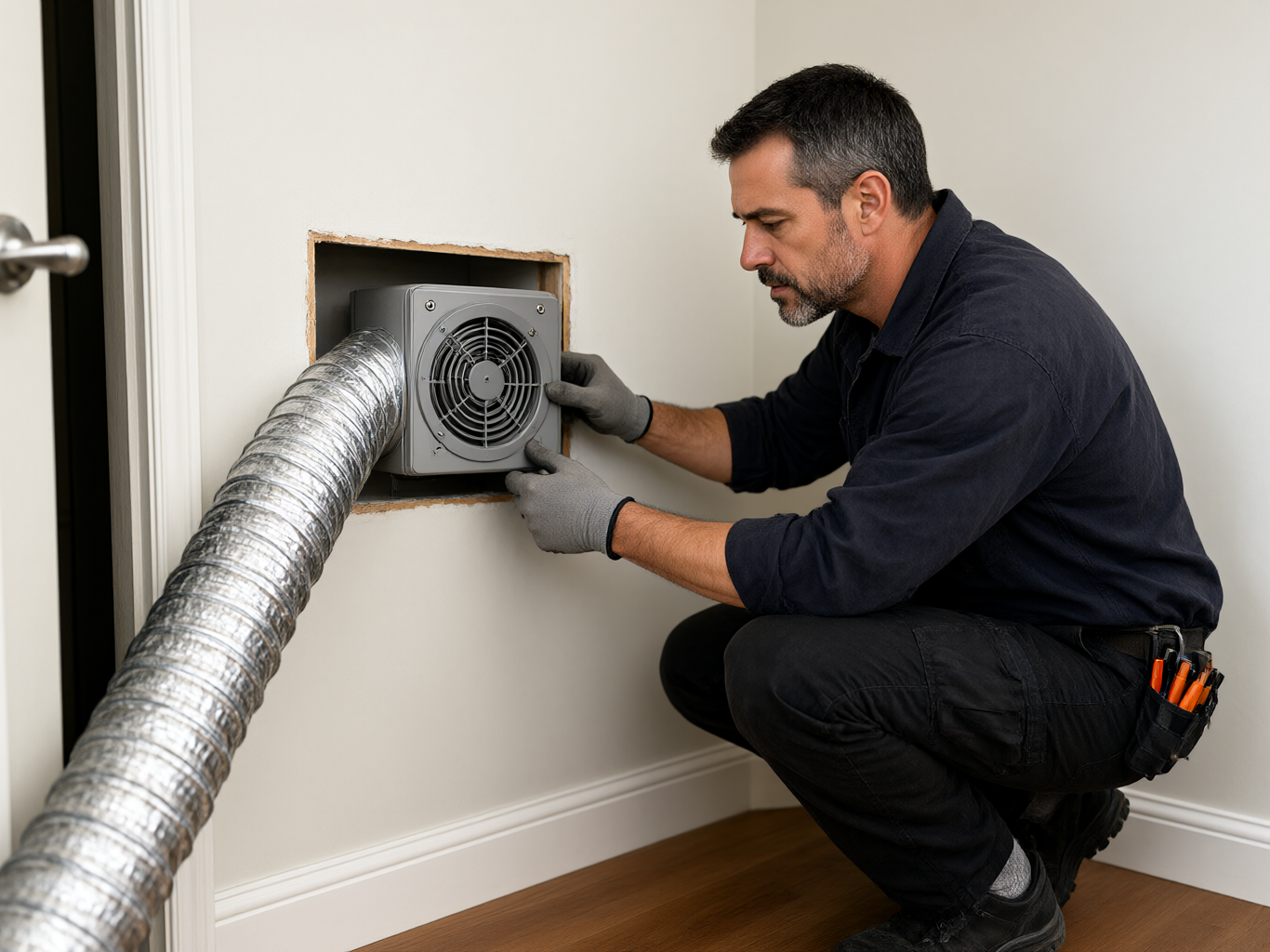
A booster fan is a powered inline fan installed inside the dryer exhaust duct to push air through long or convoluted runs where gravity and dryer blower pressure fall short. We use rigid galvanized or aluminum duct, UL-listed booster fans, pressure-sensing relays, and foil-backed tape rather than sheet-metal screws that snag lint. Common edge cases include roof-mounted terminations, crawlspace crossings, and vintage laundry closets in older Downtown Tyler and Charnwood homes where the original vent path snakes through multiple joist bays. Smith County follows the International Mechanical Code, which requires dryer exhaust to terminate outdoors with a backdraft damper and prohibits termination into attics or crawlspaces. Because Tyler has a humid subtropical climate with hot summers and mild winters, moist lint can condense inside long horizontal runs, so slope and termination placement matter as much as the fan itself.
How this page differs
This page is about adding a booster fan to a long run, not about cleaning or replacing the run. It is different from cleaning, which removes lint, and from Roof & Attic Dryer Vent Cleaning, which focuses on high runs that often need a fan. A fan helps only after the duct is intact and clear. Available in Tyler, Lindale, and Whitehouse, Texas.
Technician insight
In Tyler, the thing that catches most people out with booster fan installation is the long attic chase in older Azalea District homes where the duct sags between joists and holds moisture. Homeowners often buy a fan hoping it will fix a crushed vent behind the machine, but the fan just pushes harder against a blockage. I always replace damaged duct first and pitch every horizontal run toward the cap so humid summer air does not condense inside the pipe.
Long Duct Run in a Hollytree Two-Story
A homeowner in Hollytree reported clothes taking two cycles to dry despite a recently cleaned vent. We found the exhaust ran through a floor truss and up an attic chase before exiting the roof, creating too much static pressure for the dryer blower. We installed an inline booster fan with a pressure-sensing relay and replaced a sagging section of flexible duct. Dry times dropped to a single cycle and the termination damper now opens fully with each load.
Dryer Vent Booster Fan Installation Services We Offer
✓Booster Fan Sizing and Duct Run Assessment
We calculate total equivalent length and static pressure for long attic chases common in Azalea District bungalows, then match the fan capacity to the run.
✓Inline Booster Fan Mounting
We fasten the fan between rigid duct sections with vibration isolation and leave service clearance, which matters in tight Hollytree laundry closets.
✓Pressure-Sensing Relay Wiring
We wire the fan to cycle only when the dryer runs using a current-sensing switch, so it never runs continuously in a Smith County home.
✓Exterior Termination and Backdraft Damper Install
We fit a wall or roof cap with a damper that blocks humid Tyler air from drifting back into the duct during mild winters.
✓Damaged Duct Replacement Before Fan Install
We replace crushed or sagging duct sections first, because a booster fan cannot fix a collapsed line behind a dryer in whitehouse or lindale.
✓Booster Fan Integration with Existing Dryer Vent Cleaning
We pair fan installation with full lint removal so the new motor starts with a clear path and lower fire risk.
How it works
- 1
Site Evaluation and Airflow Measurement
We inspect the dryer location, measure duct length and bends, and check termination type to confirm a booster fan is the right fix.
- 2
Duct Preparation and Repairs
We clean existing lint, replace damaged flexible or rigid duct, and pitch horizontal runs toward the exterior cap.
- 3
Fan and Control Wiring
We mount the UL-listed booster fan, install the pressure-sensing relay, and wire it to energize only during dryer operation.
- 4
Testing and Final Inspection
We run the dryer, verify fan activation, check airflow at the termination, and confirm the backdraft damper opens and closes freely.
Pricing
Cost depends on duct length, access difficulty, fan model, and whether damaged duct must be replaced before the fan can be installed.